Banking & Finance — Real-estate taxation

Real-estate taxation

A tax law firm in Paris, BENSAID Avocats advises property companies, funds, developers, property dealers, hotel operators, family offices and individuals on the full range of real-estate tax issues: real-estate VAT, transfer duties, acquisition structuring (SIIC, OPPCI, SCPI, SCI), capital gains, IFI (real-estate wealth tax), the 3% tax, local taxes, and coordination with the real-estate fiducie in structured-financing transactions.

Paris · Geneva · Marseille · Cannes · Lisbon
— 01

Our approach to real-estate taxation

Real-estate taxation covers all the tax rules applicable to transactions involving buildings or real-estate rights: VAT (acquisition, construction, letting), registration and transfer duties, corporate income tax and personal income tax on property income and capital gains, IFI (real-estate wealth tax), the 3% tax, local taxes (land tax, office tax in the Paris region, retail-space tax, tax on vacant dwellings) and the flat-rate tax on land that has become building land.

Our lawyers act on strategic advice, project structuring, negotiation, tax audits and litigation before the tax authorities and the courts (administrative court, administrative court of appeal, Conseil d'État). We also secure real-estate financing structures and transactions backed by a real-estate fiducie — registration-duty neutrality, VAT interaction, cash-flow protection.

The firm deliberately takes on a limited number of matters to guarantee the partners' direct involvement in each case, and systematically assesses the relevance of acting before any engagement.

— 02

Areas of practice

01

Real-estate VAT

Handling complex real-estate VAT issues to limit tax risk, apply the rules optimally and avoid cash-flow burdens.

  • VAT consequences of transactions: VIR, VEFA, BEFA, land sales, construction works, self-supply, demolition, eviction indemnities, key money.
  • Structuring: favourable deduction pro-rata, VAT group, fast VAT-credit refund strategies.
  • Option to charge VAT on commercial leases and other transactions.
  • Drafting of VAT clauses: sale deeds, commercial leases, option letters, side letters.
  • Defence in the event of proposed reassessments and VAT litigation — see our article on the Conseil d'État ruling of 12 November 2025 on para-hotel activity.

02

Transfer duties

Optimising and securing transfer duties (notary fees) in real-estate transactions — for property dealers, developers, property companies and family offices.

  • Determination of the applicable rate depending on the nature of the transaction and the improvements made to the building.
  • Undertaking to build (French Tax Code art. 1594-0 G, A) — subscription, monitoring, extension.
  • Undertaking to resell (French Tax Code art. 1115) — see our article on the property-dealer regime.
  • Subscription of undertakings by supplementary deed, filing of litigation claims, requests for extension.
  • Transfer of the undertaking to build to a new purchaser, substitution of an undertaking to resell by an undertaking to build.
03

Direct taxation

Tax structuring and optimisation on the acquisition and operation of a building — for investment vehicles and individuals.

  • Structuring of vehicles: SIIC, OPPCI, SCPI, SCI or corporate real estate — see our study SIIC, deferred interest & the €3m threshold.
  • Full tax audits of target structures in the context of negotiations.
  • Management of financial flows and rental income, in particular in their international aspects.
  • Monitoring and tax reviews with treatment of related items: depreciation, rent-free periods, construction works, deduction of loan interest.
  • Real-estate capital gains — optimisation and litigation of the levy under article 244 bis A of the French Tax Code.
  • Individuals: rental income, LMNP / LMP status, professional & private capital gains.
04

Wealth taxation

Structuring and optimisation on the holding or transfer of real-estate wealth — residents and non-residents.

  • Structuring strategies limiting taxation on transfer and under the IFI.
  • Wealth structuring reducing social levies for residents and non-residents.
  • Setting up and taxation of real-estate fiducies (security fiducie & management fiducie).
  • Coordination with private banks, family offices and partner notaries.
05

Local taxes

Support on local taxes connected with real estate — for property companies, retail and logistics operators.

  • Land taxes on built and unbuilt properties.
  • Annual office tax in the Paris region (Île-de-France).
  • Retail-space tax (TASCOM).
  • Tax on vacant dwellings.
  • Flat-rate tax on the disposal for consideration of bare land that has become building land.
06

3% tax

Annual return and litigation of the 3% tax — a central issue in the real-estate taxation of structures held by non-residents.

  • French Tax Code art. 990 D to 990 H — legal entities holding French buildings directly or indirectly.
  • Cases of exemption and annual reporting obligations (form 2746).
  • Securing complex ownership chains (SCI, EU/non-EU holdings, trusts).
  • Frequent litigation: we are regularly instructed on such matters.
— 04

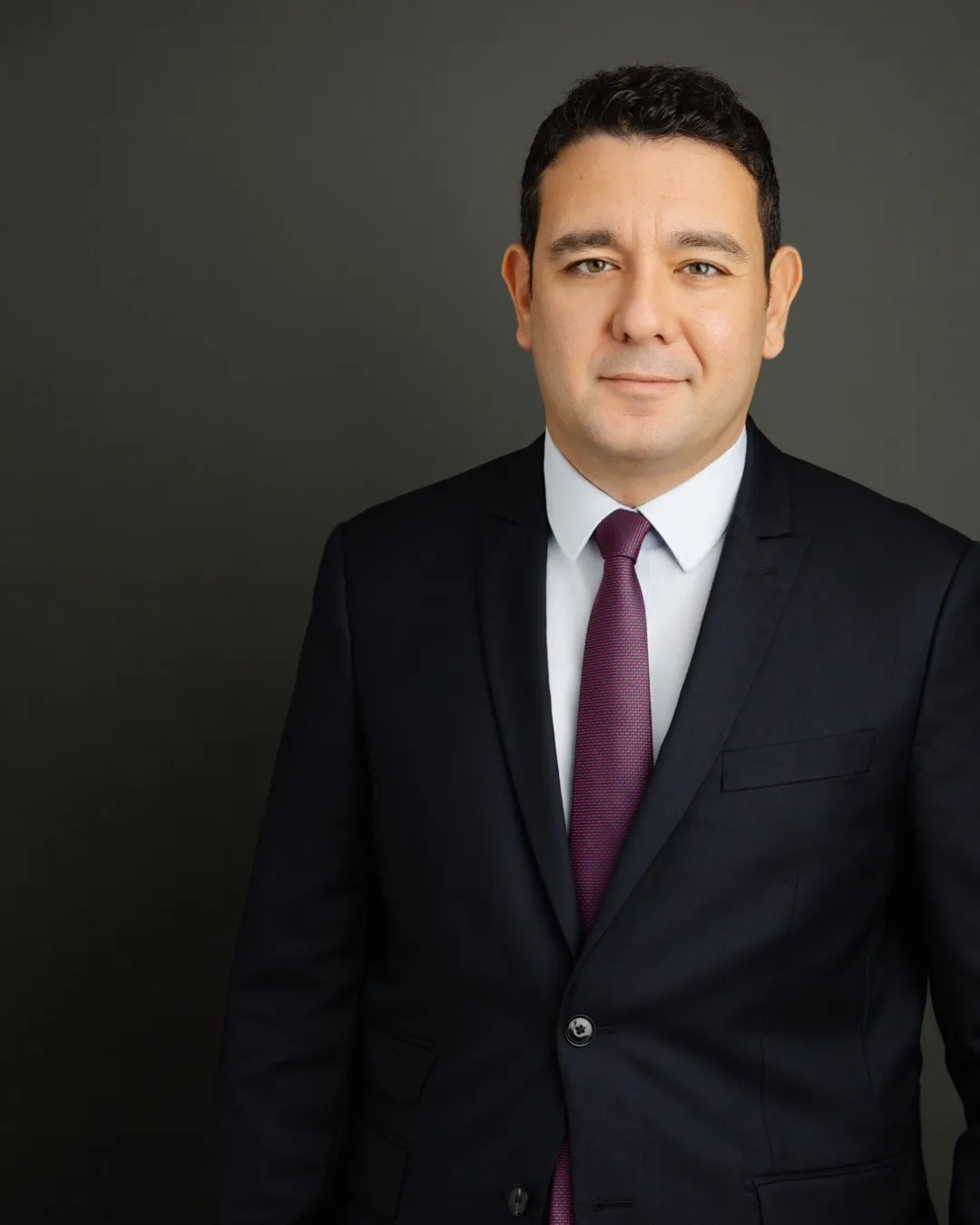
Lead counsel — François Ouairy

Partner in charge of the Paris office, specialising in VAT, real-estate taxation and wealth taxation. Best Lawyers 2026 in Tax Law, strongly recognised by Leaders League in VAT, with a dedicated real-estate tax practice. Author of leading articles in Defrénois (for notaries) and Lextenso on the undertaking to resell, active land-marketing steps and wealth disposals by VAT-taxable persons. Acts alongside Jonathan Bensaid on transactions combining real-estate taxation and the fiducie.

  • Best Lawyers 2026 — Tax Law
  • Leaders League — VAT
  • Real-estate taxation
  • Undertaking to resell
  • Capital gains 244 bis A
  • Defrénois & Lextenso
— 03

Recent publications

A selection of the firm's articles relating to real-estate VAT, transfer duties and the structuring of real-estate transactions.

VAT · Para-hotel

VAT and furnished lettings: the Conseil d'État ruling of 12 November 2025

A major decision tightening the para-hotel regime: practical consequences for furnished-rental landlords, tourism operators and the deductibility of input VAT.

November 2025 Lire l'article
Property dealer

Property-dealer notary fees

Interaction between the undertaking to resell and the undertaking to build, reduced duties and litigation: operational guidance for property dealers and value-add investors.

August 2024 Lire l'article
VAT · Construction

Clarifications on the notion of construction works for VAT

The boundary between construction works and supply of goods, its consequences for the applicable rate, reverse charge and deduction. Practical reading for construction firms and project owners.

August 2024 Lire l'article
VAT · BOFIP

Para-hotel VAT — BOFIP update

A commented reading of the administrative doctrine on para-hotel activity: the criteria for para-hotel services and their consequences for VAT qualification.

August 2024 Lire l'article
Property companies · SIIC

SIIC — Deferred interest and the €3m threshold

The mechanics of loan-interest deductibility for listed property companies: interaction with the €3m threshold and acquisition scenarios.

August 2025 Lire l'article
VAT · International

VAT permanent establishment — guidance from the CJEU

The criteria for identifying a permanent establishment for VAT and their consequences for cross-border real-estate and service transactions.

July 2024 Lire l'article
— 05

Frequently asked questions

What is real-estate taxation in France?

Real-estate taxation covers all the tax rules applicable to transactions on buildings: real-estate VAT (VEFA, BEFA, land, works), transfer duties (notary fees, undertakings to build and to resell), corporate and personal income tax on rents and capital gains, IFI (real-estate wealth tax), the 3% tax (French Tax Code art. 990 D to H), local taxes (land tax, Paris-region office tax, TASCOM, vacant dwellings) and the flat-rate tax on land that has become building land.

What is the VAT regime for the sale of a building in France?

A sale of a new building (completed less than 5 years ago) by a taxable person is subject to VAT on the full price. A sale of an existing building is in principle exempt, with a possible option to charge VAT (on the full price or on the margin depending on the situation). Sales of building land follow a specific regime. The qualification — new, existing, building land — and the seller's status (taxable person or not) determine the applicable regime, the taxable base and deductibility.

What is the undertaking to resell?

The undertaking to resell (article 1115 of the French Tax Code) allows property dealers to acquire buildings while benefiting from a reduced transfer duty (€125), provided the building is resold within a 5-year period. Otherwise, the duties are reclaimed with interest. The undertaking may be transferred to a new purchaser or replaced by an undertaking to build (article 1594-0 G, A) subject to conditions. See our article on property-dealer notary fees.

What is the 3% tax on buildings?

The 3% tax (French Tax Code art. 990 D to 990 H) is payable each year by legal entities (companies, funds, trusts) that hold — directly or indirectly — buildings located in France, on their market value. It is intended to neutralise the opacity of ownership chains. Numerous exemptions exist (listed entities, State bodies, entities under agreement that report their shareholders). Litigation on this tax is frequent — it is a central issue in the real-estate taxation of non-residents.

How can VAT on a complex real-estate transaction be optimised?

Optimisation runs through: (i) the choice of the applicable regime for each flow (sale, letting, re-invoicing); (ii) the structuring of vehicles (VAT group, sectorisation); (iii) the option policy for VAT on commercial leases; (iv) careful drafting of the VAT clauses in the deeds; (v) proactive management of VAT credits and refunds. Securing matters in advance avoids later reassessments on transactions that are often high-stakes.

How is a non-resident's real-estate capital gain taxed?

A non-resident's real-estate capital gain (French Tax Code art. 244 bis A) is subject to a withholding levy of 19% for income tax + 17.2% of social levies (unless a social exemption applies to EU/EEA/Swiss residents affiliated to a foreign scheme). Holding-period allowances apply (full income-tax exemption after 22 years, social-levy exemption after 30 years). Non-residents outside the EU/EEA must generally appoint an accredited fiscal representative. See also our page on non-resident taxation.

What is the IFI and who is concerned?

The real-estate wealth tax (IFI) applies to net taxable real-estate wealth above €1.3m, whether held directly or through companies (units, shares). French tax residents are taxable on their worldwide real-estate wealth; non-residents are taxed only on their assets located in France (unless a more favourable tax treaty applies). The IFI requires an annual valuation, the application of allowances (main residence, business assets) and the deduction of debts allocated to the real-estate wealth.

How does the real-estate fiducie interact with taxation?

The real-estate fiducie allows the ownership of a building to be transferred temporarily to a fiduciary for a purpose of security or management. Taxation is largely neutralised: no transfer duties for consideration on set-up in most cases, transparency for VAT and corporate income tax, accounting ring-fencing within the fiduciary estate. This neutrality makes the fiducie a powerful tool for structured financing and warehousing transactions.

Cité par

A real-estate transaction to structure or litigation to secure?

A confidential initial consultation, with no commitment. We reply within 48 business hours.

Jonathan Bensaid, avocat fondateur

Written by

Me Jonathan Bensaid, avocat fiscaliste, fondateur du cabinet Bensaid Avocats, inscrit aux Barreaux de Paris & Genève.