Litigation practice — Wealth regularisation

Regularising foreign accounts

A tax law firm in Paris, BENSAID Avocats advises individuals, executives, expatriates and heirs on the voluntary regularisation of their assets held abroad: undeclared bank accounts, foreign life-insurance policies, trusts, shell companies and crypto-assets. Defence strategy, negotiation with the DGFiP and the DNVSF, securing limitation periods and limiting penalties in the era of automatic exchange of information (CRS, DAC8, CARF).

Paris · Geneva · Marseille · Cannes · Lisbon
— 01

Regularise in time, and in the right order

The regularisation of assets held abroad is a complex procedure: reconstruction of the history, application of the extended limitation rules (10 years for undeclared accounts — LPF art. L. 169 al. 4), assessment of the tax evaded (income tax, social levies, inheritance tax, IFI), calculation of late-payment interest and of the specific fines (French Tax Code art. 1736 IV, 1729-0 A).

Since the closure of the STDR in 2017, regularisations are carried out by voluntary filing with the competent services (DGFiP, DNVSF). In the era of the CRS, DAC8 and CARF, foreign accounts (banks, crypto platforms, life-insurance policies) are reported automatically to the French authorities — the voluntary initiative remains the only way to limit penalties and to remove the risk of criminal prosecution for tax fraud.

We structure the preliminary analysis (audit, limitation, characterisation), the presentation of the file to the authorities and the negotiation of the settlement where appropriate — in coordination with the foreign banks and with counsel in the jurisdictions concerned (Switzerland, Luxembourg, Belgium, Israel, United States, Singapore).

— 03

Two case studies handled by the firm

Anonymised. Amounts are rounded. Documents and procedure available on request, subject to professional secrecy.

Luxembourg account of €280k — regularisation negotiated over 18 months

France–Luxembourg taxpayer, a savings account of €280k accumulated over 12 years (inheritance + expatriate salaries + interest), never reported on form 3916. Theoretical risk: 10 years of income-tax reassessment on the interest + 80% surcharge (French Tax Code 1729-0 A) + fines of €10k/year over 10 years (French Tax Code 1736 IV) ≈ €150k. Strategy: (1) voluntary regularisation organised by letter to the non-residents tax office, (2) filing of the 10 missing years of form 3916 + amended 2042 returns, (3) negotiation of the surcharge reduced to 40% instead of 80% for documented good faith. Final cost: ~€38k against ~€150k under an imposed audit.

Swiss savings account of €32k — application of the €50,000 exception

A France–Swiss client, a BCV account in Lausanne, maximum balance of €32k over 4 years, never reported. Discovered incidentally by the authorities through the CRS exchange. Strategy: demonstrate that the balance never exceeded €50,000 in any of the years concerned (detailed annual bank statements) → application of the 1649 A in fine exception → reassessment period reduced to 3 years (instead of 10). Voluntary regularisation of the last 3 years + filing of the missing form 3916. Final cost: ~€3,200 (late-payment interest + fine of €1,500/year × 3 years, negotiated down to 1 year for good faith).

— 02

Areas of practice

01

Bank accounts & safe-deposit boxes

Regularisation of accounts opened with foreign institutions, whether current accounts, securities accounts or safe-deposit boxes.

  • Reconstruction of the asset history and of the flows over the extended limitation period.
  • Tax characterisation of income: interest, dividends, capital gains, discretionary-mandate income.
  • Calculation of the tax evaded (income tax, social levies), late-payment interest and the fine under art. 1736 IV of the French Tax Code.
  • Interaction with form 3916 and the reporting obligations — see our reporting guide.
  • Coordination with the foreign bank to obtain statements and certificates.
02

Foreign life insurance

Regularisation of undeclared Luxembourg, British or Swiss life-insurance policies — resolution of successive disputes.

  • Late reporting of policies (French Tax Code art. 1649 AA) and specific fines.
  • Characterisation of the products: partial surrenders, full surrenders, possible re-characterisations.
  • Interaction with the CAA 26-1 circular (2026) on Luxembourg policies.
  • Inheritance consequences and retroactive ISF/IFI reporting.
  • Prospective compliance strategies.
03

Trusts & interposition structures

Regularisation of trusts (French Tax Code art. 792-0 bis) and interposition structures (Panamanian companies, BVI, foundations) holding assets in France or abroad.

  • 2181-Trust 1, 2 and 3 filings — event-based, annual and IFI.
  • Regularisation of omitted filings and calculation of fines (French Tax Code art. 1736 IV bis: €20,000 per filing).
  • Characterisation of distributions: income, capital, inheritance transfers.
  • Interaction with the 3% tax — see our 3% tax page.
  • Prospective restructuring: termination of the trust, return to full ownership.
04

International estates & inheritances

Regularisation of foreign assets discovered during the administration of an estate or a wealth audit.

  • Reconstruction of the inheritance tax evaded and of the interest.
  • Interaction with the tax treaties in inheritance matters (the France–Switzerland treaty was terminated in 2014).
  • Coordination with the notary in charge of the estate and with the tax authorities.
  • Securing the devolution and reconstructing the accounts for the civil-law settlement.
  • See our study on international estates.
05

Crypto-assets & foreign platforms

Regularisation of assets held on foreign platforms (Binance, Kraken, Coinbase) and undeclared wallets.

  • Obligation to report accounts on foreign platforms (form 3916-bis).
  • Reconstruction of the capital gains on disposal (French Tax Code art. 150 VH bis) over the non-time-barred period.
  • Consequences of DAC8 and CARF — automatic exchange applicable to crypto-asset service providers (CASPs) — see our DAC8/CARF 2026 analysis.
  • Interaction with the taxation of professional activities (mining, staking, airdrops).
  • Coordination with the foreign platforms to obtain the transaction history.
06

Criminal dimension & tax fraud

Securing the criminal dimension of the regularisation and coordination with criminal-law counsel where the matter is referred to the public prosecutor.

  • Assessment of the risk of tax fraud (French Tax Code art. 1741) and laundering of tax fraud.
  • Interaction with the prior-complaint procedure (the Bercy lock) and the CRPC.
  • Coordination with the National Financial Prosecutor's Office (PNF) on high-stakes matters.
  • Strategy for a judicial public-interest agreement (tax CJIP).
  • Securing the rights of the defence throughout the procedure.
— 04

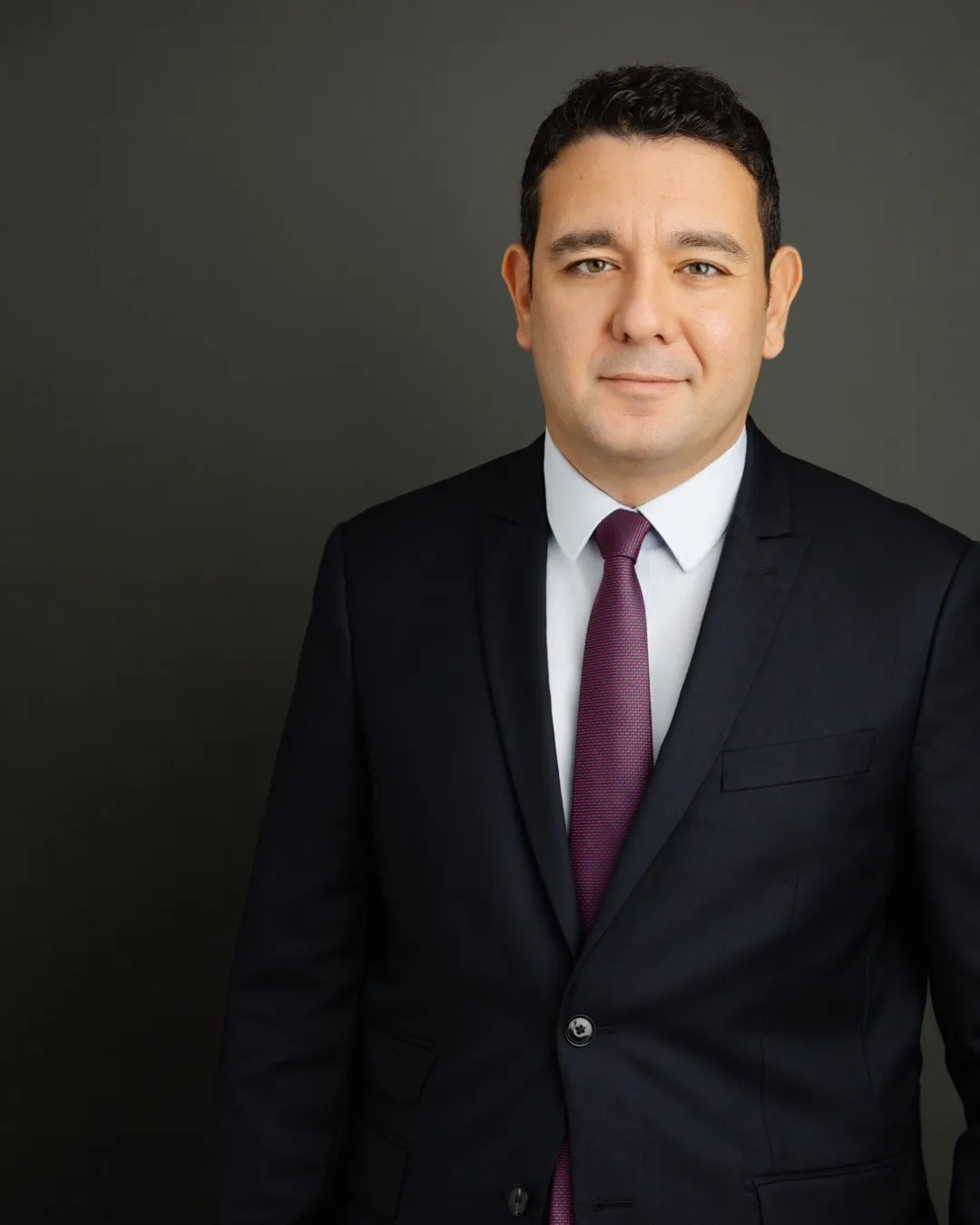
Lead counsel — Jonathan Bensaid

Founding partner, ranked Highly regarded by Décideurs — Wealth management and Best Lawyers 2026 in Tax Law. Jonathan Bensaid coordinates high-stakes wealth regularisation matters, working with Swiss, Luxembourg and Israeli private banks and with foreign counsel. He also acts on the criminal aspects of regularisation (tax fraud, laundering) in coordination with a partner criminal lawyer. Joint involvement with François Ouairy on the international and treaty taxation dimensions.

On the regularisation of foreign assets, the €50,000 exception of article 1649 A radically changes the calculation. Too few taxpayers know it exists — and when it applies, the stakes can be divided by ten.
— Jonathan Bensaid, founding partner — Non-resident taxation practice
— 05

Frequently asked questions

Why regularise a foreign account now?

With the full roll-out of the CRS (Common Reporting Standard), of DAC8 and of CARF, foreign bank accounts, life-insurance policies and crypto-asset platforms are now reported automatically to the French authorities. Once the information has been received by the DGFiP, voluntary regularisation is no longer possible and the taxpayer is exposed to surcharges of 80% (French Tax Code art. 1729-0 A), fines per account and a criminal risk of tax fraud (art. 1741 of the French Tax Code). Voluntary regularisation remains the only lever to limit the penalties.

What is the limitation period for undeclared accounts?

The limitation period is extended to 10 years (LPF art. L. 169 al. 4) where the reporting obligations relating to foreign accounts (form 3916), foreign life-insurance policies (1649 AA) or trusts (792-0 bis) have not been complied with. This ten-year limitation applies to income tax as well as to inheritance tax and the IFI. Time runs from the end of the year concerned by the reporting obligation that was not met.

What penalties apply for failing to report a foreign account?

In addition to the tax evaded and the late-payment interest (0.20% per month), the following apply: (i) a fixed fine per undeclared account (French Tax Code art. 1736 IV): €1,500 per account, raised to €10,000 for accounts opened in non-cooperative States; (ii) an 80% surcharge (French Tax Code art. 1729-0 A) on the tax evaded in respect of concealed assets; (iii) a criminal risk of tax fraud (French Tax Code art. 1741) — penalties of up to 7 years' imprisonment and a €3m fine in aggravated cases.

What are the reporting obligations for a trust?

The settlor, the deemed-settlor beneficiaries and the trustee are required to file three returns (French Tax Code art. 1649 AB, 2181-Trust forms): (i) an event-based return on the creation, modification or termination of the trust; (ii) an annual return of the value of the assets as at 1 January; (iii) a specific IFI return. A failure to file gives rise to a fine of €20,000 per return (French Tax Code art. 1736 IV bis) and the ten-year limitation.

How does a regularisation procedure work today?

Since the closure of the STDR (Service for Processing Amended Returns) in December 2017, regularisations are carried out by voluntary filing with the tax office, or directly with the DNVSF for high-stakes matters. The typical procedure comprises: (i) a preliminary audit and reconstruction of the assets; (ii) calculation of the tax, interest and fines; (iii) filing of the amended returns (income tax, IFI, inheritance tax); (iv) voluntary payment; (v) where appropriate, negotiation of a settlement or of a discretionary remission.

Does regularisation automatically expose the taxpayer to criminal prosecution?

No. A voluntary regularisation that is sincere and complete is generally dealt with through the administrative channel, without referral to the prosecutor. The Bercy lock (LPF art. L. 228) requires, in principle, a prior complaint by the authorities to initiate prosecution. The judicial public-interest agreement (tax CJIP) or the CRPC may also resolve the criminal dimension. But the stakes must always be assessed — beyond certain thresholds, the criminal risk increases significantly.

Should an inherited foreign account be regularised?

Yes. An heir who discovers a foreign account not declared by the deceased must (i) file an amended inheritance return including the assets, (ii) file the missing form 3916 for the period after the death, and (iii) regularise the income (interest, dividends, capital gains) attaching to those assets. Failing that, the ten-year limitation and the penalties apply to the heir. Prompt regularisation is essential, particularly in jurisdictions subject to the CRS.

Must crypto-assets held on a foreign platform be reported?

Yes. Accounts opened with foreign crypto-asset platforms (Binance, Kraken, Coinbase Global, etc.) must be reported via form 3916-bis. Capital gains on disposal are taxable under article 150 VH bis of the French Tax Code. With the progressive entry into force of CARF (Crypto-Asset Reporting Framework) and DAC8, the platforms now report the information to France. Voluntary regularisation of the omitted accounts and gains remains the only way to avoid heavy penalties and criminal risk — see our DAC8/CARF analysis.

Cité par

A regularisation to structure or a reassessment risk to anticipate?

A confidential initial consultation, with no obligation. We reply within 48 business hours.

Jonathan Bensaid, avocat fondateur

Written by

Me Jonathan Bensaid, avocat fiscaliste, fondateur du cabinet Bensaid Avocats, inscrit aux Barreaux de Paris & Genève.