Banking & Finance — Business taxation

Business taxation & VAT

A tax law firm in Paris, BENSAID Avocats advises companies — French and international groups, SMEs, holdings, real-estate companies, investment funds — on all their tax issues: corporate income tax, VAT, tax consolidation, VAT group, intra-group flows, cross-border operations, tax audits and litigation. Strongly recognised by Leaders League in VAT, and listed in Best Lawyers 2026 for tax law.

Paris · Geneva · Marseille · Cannes · Lisbon
— 01

Our approach to business taxation

Business taxation covers all the rules applicable to the tax life of a company: corporate income tax (CIT), the parent-subsidiary regime, tax consolidation, transfer pricing, directors' remuneration, the taxation of civil companies and holdings, the structuring of intra-group flows and trade-offs relating to the nature of profits or to cash management.

VAT — a consumption tax, yet fundamentally European — calls for a combined reading of the French Tax Code, the VAT Directive 2006/112/EC, the case law of the CJEU and administrative doctrine (BOFIP). Our lawyers act at every stage: reporting, structuring, tax audit and litigation. Drawing on significant experience in real-estate VAT, the firm also supports major projects of developers, real-estate companies and property dealers.

The firm deliberately takes on a limited number of matters to guarantee the partners' direct involvement in each case, and systematically assesses the relevance of acting before any engagement.

— 02

Areas of practice

01

VAT & specific regimes

Management and securing of all VAT regimes applicable to the company's activity, anticipating structural changes and tax trade-offs.

  • Choice of reporting regime: CA3 (standard regime), CA12 (simplified regime), small-business VAT exemption (franchise en base), actual regime.
  • Strategic elections (VAT on receipts / on debits, election for taxation).
  • Intra-Community operations, territoriality rules, real-estate VAT (see our dedicated practice).
  • Support during structural changes (disposal, contribution, restructuring) and tax trade-offs.
  • Drafting of VAT clauses in commercial contracts, leases, deeds and intra-group agreements.

02

Direct business taxation

Advice on corporate income tax and all the specific regimes applicable to groups, holdings and civil companies.

  • Corporate income tax (Tax Code art. 205 et seq.) — base, rate, deductibility of expenses.
  • Parent-subsidiary regime (Tax Code art. 145 and 216) — exemption of subsidiary dividends, 5% share of costs and expenses.
  • Tax consolidation (Tax Code art. 223 A et seq.) — fiscal consolidation within a group held at 95%.
  • Directors' remuneration: interaction between CIT, income tax, ISF / IFI, social contributions, inbound-assignment regimes.
  • Taxation of civil companies (SCI, SCP) and active (animatrice) holding companies.
  • Structuring of intra-group flows (dividends, interest, royalties, management fees) and trade-offs according to the nature of profits.
03

VAT group & optimisation

Support in setting up a VAT group (mechanism operational since 2023), opportunity assessment, feasibility studies and drafting of the election.

  • Opportunity assessment: pre/post VAT simulation, evaluation of the cash-flow gain and of the reduction in residual VAT.
  • Verification of the control criteria (financial, economic, organisational) and definition of the perimeter.
  • Prevention of double-taxation risks on intra-group operations and analysis of deduction coefficients.
  • Drafting and filing of the election with the tax authorities (irrevocable for 3 years).
  • Operational implementation: group representative, reporting, consolidated returns.
  • Alternative: cost-sharing arrangement (Tax Code art. 261 B) for exempt activities.
04

Tax audit & regularisation

Comprehensive assistance during tax audits, reassessment proposals and litigation — CIT, VAT, CVAE, withholding taxes, payroll tax.

  • Assistance during the on-site tax audit of the accounts (vérification de comptabilité) and the remote examination of the accounts (examen de comptabilité).
  • Drafting of observations in response to the reassessment proposal and negotiation with the audit service.
  • Hierarchical appeals (superior, departmental interlocutor) and referral to the tax commissions.
  • Litigation claims, payment deferral, referral to the administrative court, appeal, cassation.
  • Preventive regularisation: internal audits, ruling requests, compliance measures — see our page on regularisation.
05

International VAT & credits

Handling of VAT on international flows (supplies of goods, services, customs, real-estate-predominant companies), refunds, recovery of foreign VAT and management of credits.

  • Territoriality rules: intra-EU supplies of goods (B2B / B2C), exports, imports, supplies of services (Tax Code art. 259, 259 A et seq.).
  • Reverse charge of VAT (customer established in France), mandatory invoice mentions.
  • Recovery of foreign VAT (13th directive, electronic 9th-directive procedure for EU businesses).
  • Management of VAT credits and fast-track refund procedures — see our article on appeal time limits.
  • VAT fixed establishment — analysis in light of CJEU case law.
  • Customs & real-estate-predominant companies: interaction with customs taxation and real-estate-predominant companies.
— 04

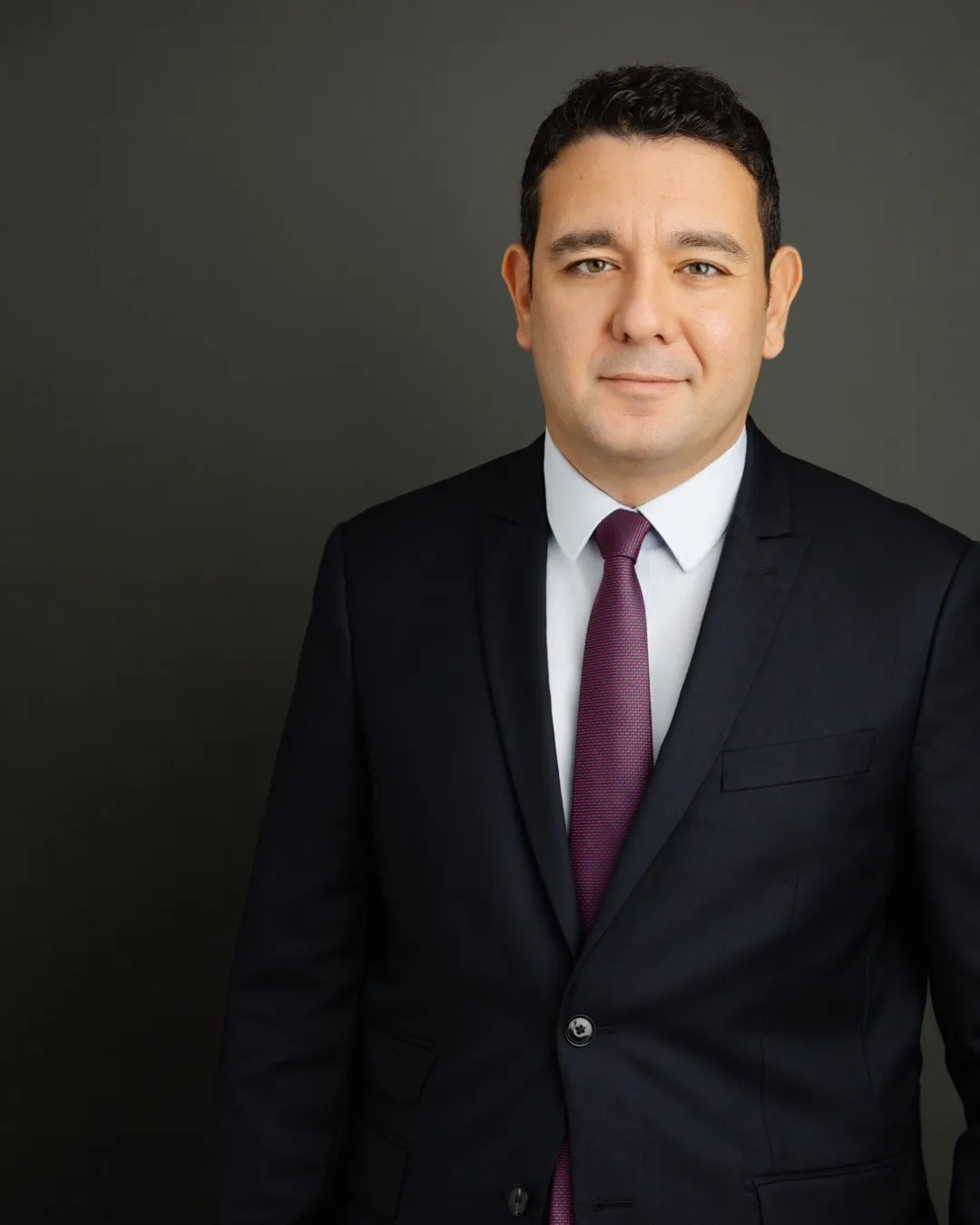
Lead counsel — François Ouairy

Partner in charge of the Paris office, specialising in VAT, business taxation and wealth taxation. Best Lawyers 2026 in Tax Law, firm listed by Best Lawyers for tax law in Paris, strongly recognised by Leaders League in VAT. Acts across the entire tax life of companies, from strategic advice to litigation before the Conseil d'État, alongside Jonathan Bensaid on matters with a wealth or fiduciary component.

  • Best Lawyers 2026 — Tax Law
  • Leaders League — VAT
  • VAT group
  • Tax consolidation
  • Tax audit
  • International VAT
— 05

Frequently asked questions

What are the risks in the event of a VAT audit?

The main risk is a reassessment together with penalties of between 10% and 100% and late-payment interest (0.2% per month, i.e. 2.4% per year). The main grounds for VAT reassessment concern deductibility, territoriality rules (intra-Community, exports), mandatory mentions on invoices and the characterisation of operations. Support from the outset of the audit helps secure positions and negotiate the disputed points.

What is a VAT group and how can it be optimised?

The VAT group (or "single taxable person"), operational since 2023, allows several undertakings that are financially, economically and organisationally linked to form a single taxable person. Intra-group operations fall outside the scope of VAT, which simplifies management and reduces residual VAT. Optimising it requires a prior simulation, a precise definition of the perimeter and an analysis of the deduction coefficients. The election is irrevocable for 3 years.

What is a real-estate-predominant company and what are its tax consequences?

A real-estate-predominant company (SPI) is a company whose assets are principally made up of buildings or rights relating to buildings. This status triggers specific rules: registration duties of 5% on the transfer of shares (instead of the reduced rate), taxation of gains as real-estate capital gains (Tax Code art. 244 bis A for non-residents), inclusion in the IFI base, and specific reporting obligations.

Does the margin-scheme VAT apply to all real-estate resales?

No. The margin-scheme VAT applies only to certain operations, in particular where the dealer had no right to deduct at the time of the initial acquisition. It requires an analysis of the tax regime of the acquisition and of the nature of the operation (building land, existing building, new building). CJEU case law (in particular the Icade Promotion ruling) has clarified the conditions of application — see our real-estate taxation practice.

How should a tax audit be prepared?

Preparation rests on several lines of action: (i) checking the consistency of tax and accounting returns; (ii) documenting the special regimes and the elections made; (iii) keeping up to date the FEC (accounting-entries file), the reliable audit trail for VAT, the IFU and the DAS 2; (iv) archiving supporting documents and material evidence; (v) anticipating sensitive points through an internal audit or a ruling. A tax lawyer can also manage the interaction with the tax authorities.

What remedies are available after a tax reassessment?

Several avenues of appeal exist: (i) observations in response to the reassessment proposal (30 days, extendable); (ii) hierarchical appeal to the auditor's superior, then to the departmental interlocutor; (iii) referral to the tax commissions (commission for direct taxes and turnover taxes, tax-abuse committee); (iv) litigation claim after the tax is put into recovery; (v) referral to the administrative court, then appeal and cassation. A payment deferral may be requested to suspend recovery.

How does tax consolidation work?

Tax consolidation (Tax Code art. 223 A et seq.) allows a group of companies held at least 95% by the parent company to consolidate its taxable results — offsetting of profits and losses, neutralisation of intra-group flows, consolidated management of CIT. The election lasts 5 years, renewable, and requires the parent and the subsidiaries to be subject to CIT in France. Leaving the regime has tax consequences that must be anticipated.

Is a fiscal representative needed to recover foreign VAT?

Recovering VAT borne abroad depends on the country of the company's seat and the country where the VAT was borne. For companies established in the EU, the procedure goes through the 9th directive (national electronic portal, filing with the tax authorities of the seat). For companies outside the EU, the 13th directive applies — with a possible obligation to appoint a fiscal representative depending on the country of refund.

Cité par

A structuring question, a tax audit, a dispute?

A confidential initial consultation, with no commitment. We reply within 48 business hours.

Jonathan Bensaid, avocat fondateur

Written by

Me Jonathan Bensaid, avocat fiscaliste, fondateur du cabinet Bensaid Avocats, inscrit aux Barreaux de Paris & Genève.