— The surviving spouse
A non-US spouse has no right to the unlimited deduction
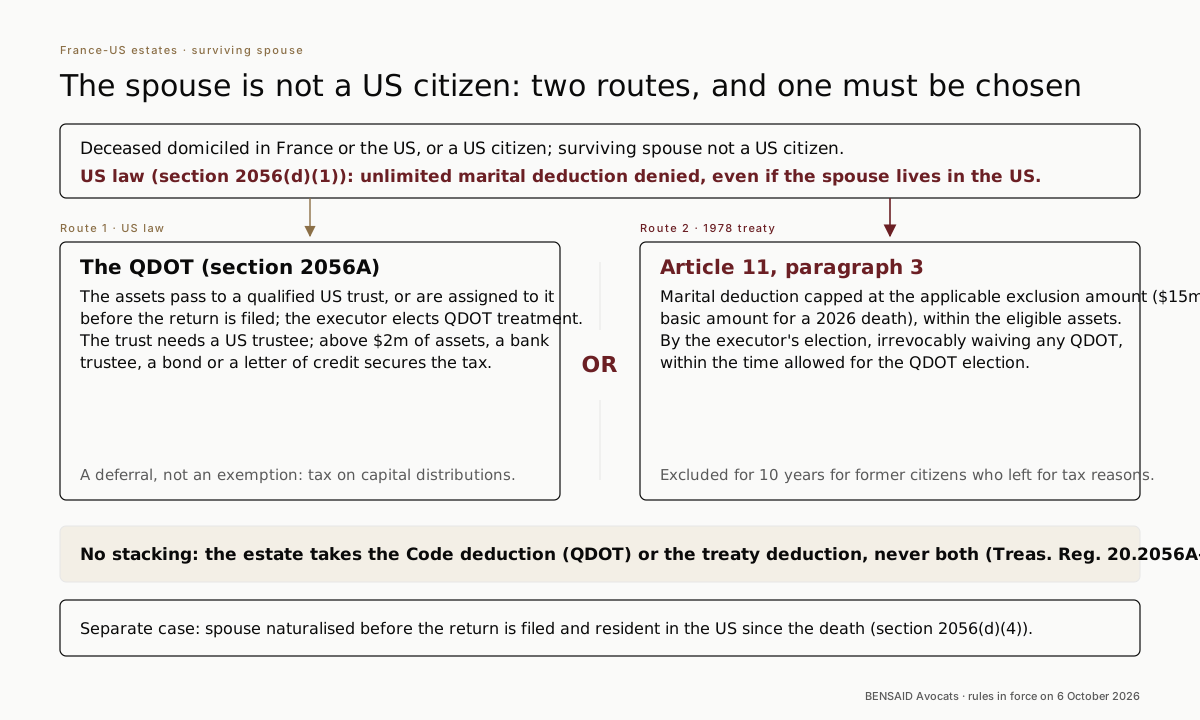
US law reserves the unlimited marital deduction for a surviving spouse who is a US citizen (26 U.S.C. section 2056(a) and (d)(1)). A French spouse, or a spouse of any other nationality, does not get it, even if living in the United States: the estate is taxed at the first death, above the applicable exclusion, on what passes to the spouse. A spouse who becomes a US citizen before the return is filed, having resided in the United States since the death, regains the deduction (section 2056(d)(4)).
First route, the QDOT. The assets pass to a qualified domestic trust (section 2056A), governed by the law of a US state and having at least one US trustee, citizen or corporation, able to withhold the tax on distributions of capital, or the spouse irrevocably assigns them to it before the return is filed; the executor elects QDOT treatment in that return. The deduction is then allowed, but the tax is not removed: it is deferred, then due on distributions of capital and at the spouse's death, with a security arrangement above $2 million of assets: bank trustee, bond or letter of credit (Treas. Reg. 20.2056A-1 and 20.2056A-2).
Second route, article 11(3) of the treaty. The deceased was domiciled in France or the United States, or a US citizen; the surviving spouse was domiciled in one of the two states (with at least one French-national spouse where both were domiciled in the United States); the assets would have qualified for the deduction had the spouse been a US citizen. The executor elects the treaty and irrevocably waives any other marital deduction, within the time allowed for the QDOT election. The deduction equals the lower of the value of the qualifying assets and the applicable exclusion amount at the date of death (basic amount of $15 million for deaths in 2026, to which may be added the exclusion carried over from a predeceased spouse), disregarding the deceased's prior gifts (Rev. Proc. 2025-32). Former citizens and long-term residents whose renunciation of status had avoiding tax as one of its principal purposes are excluded for ten years (article 1(4)).
One or the other, never both. The US regulations say so: the estate may take the Code deduction (QDOT) or the treaty deduction, and may not combine them on the balance of the assets (Treas. Reg. 20.2056A-1(c)). If the value passing exceeds the cap, the treaty route leaves the excess taxable; of the two routes, only the QDOT then covers the whole, at the price of the trust and the deferral. The choice is exercised on the US estate tax return, within the time allowed for the QDOT election, on figures for both options.
For a decedent domiciled in France, article 11(2) also applies to non-community assets passing to a non-US-citizen spouse and taxable in the United States only by reason of their situs (real estate, permanent establishment, tangible movables): they enter the US tax base only if their value, after deductions, exceeds half of the value of all the assets in that base. The rule does not benefit a US citizen domiciled in France or the former citizens mentioned above.
On the French side, assets acquired for value during the marriage by a spouse domiciled in the United States or holding US citizenship, and passing to the other spouse, are treated as community property for French tax purposes, unless another regime was expressly chosen (article 11, paragraph 1). The matrimonial regime and its connecting factor therefore weigh directly on the base taxed in France.